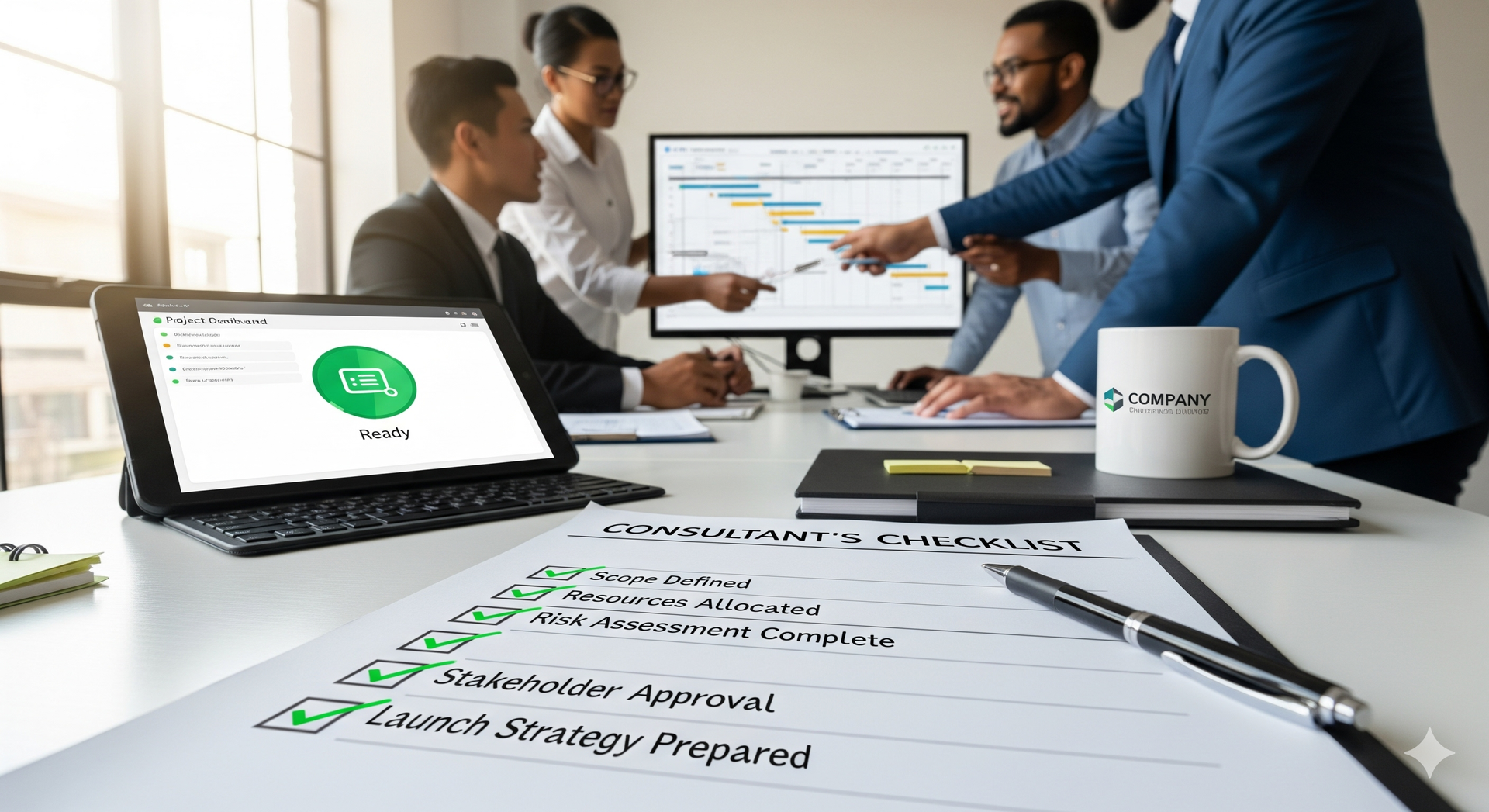
Project Readiness: Key Questions Before a Consultant
Hiring a consultant can accelerate your project, but too many businesses dive in before checking their readiness. At Josty, we’ve seen projects stall, fail, or underdeliver simply because clients skipped essential preparation. This guide gives you a checklist of five critical questions to ask before you hire a consultant. By assessing your business readiness, project planning, stakeholder alignment, and resource availability, you’ll protect your investment, avoid wasted time, and maximise the value of your consultant engagement.
Introduction: Why Readiness Matters Before Hiring a Consultant
Hiring a consultant is one of the smartest moves a business can make when facing a critical project. Whether you’re launching a new product, attacking new markets, upgrading IT systems, or introducing new processes, the right consulting partner can bring expertise, focus, and fresh perspective. But here’s the reality we often see at Josty: many businesses engage consultants before they’re truly project-ready and the result is wasted time, wasted money, and frustrated teams.
Being project-ready means more than having an idea or a list of goals. It means your business has clarified objectives, aligned stakeholders, allocated resources, and created a realistic foundation for collaboration. Without this preparation, even the best consultant will struggle to deliver outcomes that match your expectations.
We’ve seen businesses try to push ahead with projects while asking their teams to maintain daily operations. The result? Projects delayed or cancelled altogether, or worse projects completed but well below standard. In one case, a business never got their project off the ground because staff were too consumed by operations. In another, daily operations deteriorated while the project limped along, leading to poor-quality results.
This isn’t about discouraging consultant engagement in fact, we believe in the transformative power of consulting. But for consulting to work, clients need to be ready. That’s why we’ve developed a simple checklist of five key questions. Ask these before you hire, and you’ll know whether your organisation is truly prepared for external help.
At Josty, our role is to help businesses build scalable strategies and sustainable success. This starts with ensuring readiness. Let’s explore the five questions that separate businesses who thrive with consultants from those who struggle.
The 5 Questions to Ask Before You Hire a Consultant
1. Do You Have Clarity on Your Project Objectives?
A consultant can’t help you reach your destination if you don’t know where you’re going. The first step to project readiness is having clear, measurable objectives. Too many businesses start with vague statements like “we need to improve operations” or “we want to expand into new markets.” While these are ambitions, they are not objectives.
Why clarity matters:
- Consultants need to anchor their recommendations in your defined goals.
- Ambiguity creates scope creep, wasted budget, and conflicting expectations.
- Clear objectives allow you to measure success and hold all parties accountable.
Checklist for clarity:
- What specific problem are we solving?
- What outcome would define success?
- How does this project connect to our broader strategic planning?
- Are the objectives SMART (specific, measurable, achievable, relevant, time-bound)?
Example: Instead of “upgrade IT systems,” a clear objective is: “Implement a new ERP system within 12 months to improve inventory accuracy by 30% and reduce order fulfilment time by 20%.”
At Josty, we often help clients refine their project vision into actionable objectives. Without this step, consultant engagement risks becoming a “nice-to-have” discussion rather than a structured partnership. Business readiness starts with knowing what you want to achieve.
2. Can Your Current Team Balance Operations and the Project?
This is one of the biggest reasons businesses fail with consultants: they expect staff to maintain daily operations and lead major projects simultaneously. While your team may be talented, bandwidth is finite.
At Josty, we’ve seen this play out countless times. In one business, staff were asked to manage both customer service and a system upgrade. The result? Customers were neglected, staff burned out, and the upgrade dragged for months before being abandoned. In another case, the project went ahead but operational standards dropped, and the project itself fell short of expectations.
Key considerations:
- Do we have the capacity to take on a project without sacrificing performance?
- Who will be responsible for project leadership?
- Will we need external support for backfilling daily roles?
- Are we willing to dedicate internal champions who can work alongside the consultant?
Framework: Think of a project like rowing a boat. If half your crew is trying to row and bail water at the same time, the journey slows or worse, the boat sinks. Consulting works best when clients allocate dedicated time and people to collaborate with external experts.
Business readiness requires acknowledging that you can’t do everything at once. Being honest about resourcing will prevent the common trap of asking a consultant to carry the full weight while staff remain unavailable.
3. Have You Defined Scope, Timelines, and Resources Realistically?
Projects collapse not because of poor consulting but because of unrealistic planning. One of the first things we assess at Josty is whether a client has defined scope, timelines, and resources in a grounded way.
Common pitfalls:
- Expecting “too much, too fast” (e.g., launching into new markets in six weeks with no research).
- Underestimating budget (e.g., expecting enterprise-grade solutions on a small-business budget).
- Overloading scope (e.g., trying to roll out three new systems simultaneously).
Business readiness questions:
- Is the scope clearly defined and agreed upon?
- Have we built in contingency for time and budget overruns?
- Are our expectations aligned with industry benchmarks and consultant recommendations?
- Do we have a resourcing plan for people, technology, and funding?
Practical example: If you plan to introduce a new CRM, be realistic about the phases: data migration, training, integration, and adoption. Don’t expect overnight transformation.
A consultant thrives in a structured environment. Without defined scope, timelines, and resources, they spend their time firefighting instead of delivering value. At Josty, we help clients ground their planning in reality, ensuring projects stay achievable rather than aspirational.
4. Do You Have Internal Alignment and Stakeholder Buy-In?
Even the best project planning falls apart if internal stakeholders aren’t aligned. We’ve worked with businesses where one department is excited about change while another resists fiercely. The consultant becomes caught in the crossfire, and momentum is lost.
Signs of poor alignment:
- Conflicting messages from leadership.
- Teams treating the project as “management’s idea” rather than a shared initiative.
- Stakeholders withholding cooperation until they see proof of benefit.
Business readiness checklist:
- Have all relevant departments been consulted in early planning?
- Has leadership agreed on the importance of this project?
- Are communication channels in place to keep everyone informed?
- Is there a change management strategy for handling resistance?
Josty’s perspective: Consultants cannot replace leadership buy-in. If your leaders are divided, staff will mirror that uncertainty. Part of being project-ready is ensuring a united front. This doesn’t mean every stakeholder will be 100% aligned, but there must be enough commitment from leadership to drive the project forward.
Tip: Before engaging a consultant, hold an internal readiness workshop. Clarify roles, address concerns, and create shared ownership. This will ensure the consultant is welcomed into a collaborative environment rather than a political battlefield.
5. Are You Prepared to Collaborate Effectively with a Consultant?
Finally, ask yourself: are you ready to treat your consultant as a partner rather than a vendor? Too often, businesses view consulting as a “handover” exercise: “Here’s the problem, fix it.” But sustainable outcomes only happen when the client collaborates actively.
Effective collaboration requires:
- Transparency: sharing the full picture, not just selective information.
- Responsiveness: making decisions promptly when consultants need input.
- Trust: respecting the consultant’s expertise while contributing your business knowledge.
- Accountability: recognising that project outcomes are shared, not outsourced.
Business readiness mindset: You don’t hire a consultant to “do the project for you.” You hire a consultant to accelerate, guide, and strengthen your project journey. The consultant brings external expertise, but you bring context, commitment, and execution capacity.
At Josty, we’ve seen that the most successful engagements happen when clients are open, collaborative, and proactive. Consultants cannot operate in isolation. The partnership must be built on shared responsibility.
Final Thoughts: Ensuring Your Business Is Truly Project-Ready
Engaging a consultant can be a turning point for your business. From strategic planning to IT upgrades, from launching products to entering new markets, consultants bring expertise and clarity that can save you months of effort and thousands of dollars. But only if you’re ready.
The five questions in this guide are not theoretical. They reflect the real-world challenges we’ve seen businesses face at Josty: unclear objectives, over-stretched teams, unrealistic timelines, weak stakeholder buy-in, and poor collaboration. These are the traps that derail projects before they even start.
By asking:
- Do we have clarity on our objectives?
- Can our team balance operations and the project?
- Have we defined scope, timelines, and resources realistically?
- Do we have internal alignment and stakeholder buy-in?
- Are we prepared to collaborate effectively with a consultant?
…you are not only protecting your investment, you are empowering growth and securing success.
The reality is that consultant engagement is most effective when the client is ready. Readiness doesn’t mean perfection it means clarity, alignment, and commitment. With these in place, consultants can bring extraordinary value. Without them, even the best consultant will struggle to deliver.
At Josty, we believe in setting businesses up for sustainable success. If you’re considering a project, ask yourself these five questions first. And if you’re unsure of the answers, don’t risk wasted time and money. Book a consultation with Josty today. We’ll help you assess your readiness, refine your objectives, and design a project approach that works ensuring your investment delivers results that last.
Because the question isn’t just whether you need a consultant. The real question is:
are you project-ready?
Post written by Jason Jost
